Pune Super Kickers
Introduction to Pune Super Kickers
Pune Super Kickers is a landmark desi multiplayer sports game that has redefined regional gaming in India since its launch on 15 June 2023. Developed by Pune Gaming Studios – a homegrown indie team rooted in Maharashtra’s cultural capital – and published in strategic partnership with Daman Games, this title stands as a testament to what happens when game development is driven by a deep understanding of Indian gamers’ needs, preferences, and cultural identity.
Unlike global sports games that often feel disconnected from the Indian context – requiring high-end hardware, consuming exorbitant data, and prioritizing Western sports and aesthetics – Pune Super Kickers was built by Indians, for Indians. Its core premise draws inspiration from the nation’s most cherished grassroots sports: gully cricket, kho-kho, kabaddi, and street football – the games that millions of Indians grow up playing in neighborhoods, parks, village grounds, and schoolyards across the country.
Within just nine months of its launch, Pune Super Kickers crossed 15 million downloads on the Google Play Store and Apple App Store combined, securing the title of India’s top-rated sports game with a 4.6/5 rating from over 750,000 user reviews. Its unprecedented success can be attributed to three foundational pillars that address critical gaps in the Indian gaming market:
- Hyper-Localization: Support for 10+ Indian languages (Hindi, Tamil, Telugu, Marathi, Bengali, Gujarati, Punjabi, Kannada, Malayalam, Assamese) and region-specific content that speaks to diverse cultural groups.
- Technical Accessibility: Optimization for low-end smartphones (2GB RAM, Android 8.0+/iOS 12.0+) and minimal data usage (50MB/hour) – a game-changer for the 70% of Indian mobile users who rely on budget devices and limited data plans.
- Community-Centric Design: A development philosophy that prioritizes player feedback, with regular updates, events, and features directly shaped by the game’s user base.
What truly sets Pune Super Kickers apart is its ability to balance casual accessibility with competitive depth. Whether you’re a college student looking for a quick “chai break match” between lectures, a working professional unwinding after office hours, or a serious esports athlete vying for lakhs in prize money, the game adapts to your playstyle. This versatility has helped it build a diverse player base – from 12-year-olds in small-town Tamil Nadu to 40-year-old professionals in Bangalore – all united by their love for desi-themed gaming.
The game’s impact extends beyond entertainment; it has emerged as a catalyst for grassroots esports in India, providing opportunities for young gamers from tier 2, tier 3 cities, and rural areas to showcase their skills on a national stage. It has also challenged the narrative that successful gaming titles must come from global studios, proving that homegrown games with a deep understanding of local audiences can thrive in the competitive Indian market.
Gameplay Mechanics of Pune Super Kickers
Pune Super Kickers offers a dynamic, team-based gameplay experience that blends the unstructured joy of gully sports with the strategic depth of competitive multiplayer. The core objective varies by game mode, but the underlying mechanics are designed to be intuitive for first-time gamers (a significant portion of India’s user base) while offering enough complexity for veterans to master. This balance is critical in a market where gaming literacy varies widely across regions and age groups.
Core Gameplay Loop
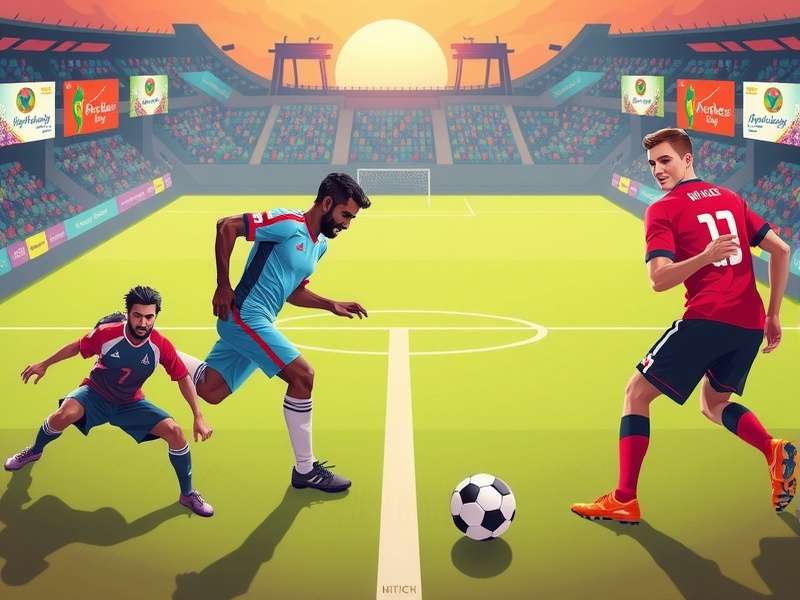
At its heart, Pune Super Kickers is a 5v5 team game where two squads compete to score points by completing mode-specific objectives – such as scoring goals, capturing flags, defending targets, or accumulating runs – within a time limit (typically 10-15 minutes for standard modes). The controls are optimized for touchscreens, with a virtual joystick on the left for movement and context-sensitive action buttons on the right for passing, shooting, tackling, and activating special abilities.
What makes the gameplay uniquely desi is the “Gully Skill System” – a set of special moves inspired by street sports tactics. Examples include:
- Gully Spin: A deceptive pass that changes direction mid-air, confusing defenders (inspired by the trickery of gully cricket bowlers).
- Lungi Dash: A short burst of speed that allows players to evade tackles (a nod to the quick movements of street football players).
- Kabaddi Tackle: A powerful defensive move that immobilizes opponents temporarily (drawn from the traditional sport of kabaddi).
- Pani Puri Boost: A team-wide buff that increases speed and stamina for 10 seconds (a playful reference to India’s favorite street food).
Players earn in-game currency called “Desi Coins” by winning matches, completing daily challenges, participating in events, and achieving milestones (e.g., “Score 5 goals in a single match” or “Win 10 Quick Matches”). These coins can be used to unlock new avatars, skins (e.g., cricket bats modeled after traditional wooden “gully bats,” team jerseys inspired by Indian states, and accessories like turbans or bindis), and ability upgrades.
Crucially, the progression system is designed to be fair and non-pay-to-win – a deliberate choice to cater to Indian gamers who are often wary of paywalls. All core gameplay features are accessible for free, and premium items (available via in-app purchases or special events) are purely cosmetic, ensuring that skill – not spending power – determines success.
Game Modes
Pune Super Kickers offers four primary game modes, each tailored to different playstyles and time constraints – a key consideration for Indian users who often game in short bursts (during commutes, lunch breaks, or household chores) or have intermittent internet access.
Quick Match (Most Popular Mode)
Quick Match is the go-to mode for casual players, allowing users to jump into a 5v5 match with random teammates and opponents in under 30 seconds – a critical feature in a market where slow load times and long matchmaking queues are major pain points. The objective is to score more points than the opposing team within 12 minutes, with points awarded for goals, assists, and defensive plays.
This mode uses a skill-based matchmaking system that pairs players of similar ranks, ensuring fair competition for both new and experienced gamers. Ranks range from “Rookie Gully Player” (entry-level) to “National Champion” (top tier), with each rank unlocking exclusive cosmetic rewards (e.g., state-themed jerseys, rare bat skins). The mode also features dynamic weather effects that add variety to gameplay:
- Monsoon Rain: Slows movement slightly and makes the field slippery, rewarding careful passing over reckless runs.
- Sunny Day: Boosts player speed and stamina, encouraging aggressive gameplay.
- Foggy Morning: Reduces visibility, making it harder to spot distant opponents and emphasizing teamwork.
Quick Match is particularly popular among commuters and casual gamers, with over 60% of daily active users (DAUs) choosing this mode as their primary playstyle. Its accessibility and fast-paced action have made it a staple of Indian gaming culture, with players often referring to it as “gully gaming on the go.”
Team Dynamics & Communication
Teamwork is central to success in Pune Super Kickers, and the game includes communication tools tailored to the unique needs of Indian users. Unlike many global games that rely on voice chat (which is often hindered by poor internet connectivity and language barriers), Pune Super Kickers uses a contextual quick-chat system with pre-recorded messages in all supported Indian languages.
For example:
- Hindi speakers can send “Pass karo!” (Pass it!), “Defend karo!” (Defend!), “Goal!” (Goal!), or “Shabaash!” (Well done!).
- Tamil speakers can send “Thirumbi!” (Pass!), “Kadaikka!” (Defend!), “Gol!” (Goal!), or “Nandri!” (Thank you!).
- Marathi speakers can send “Pass kara!” (Pass it!), “Raksha kara!” (Defend!), “Gol!” (Goal!), or “Bhala kaam!” (Good job!).
This system ensures that players can communicate effectively regardless of language or internet quality. The game also supports regional server selection, allowing users to choose servers in their part of India (Mumbai, Bangalore, Delhi, Pune, Kolkata, Hyderabad) to minimize latency. This is a critical feature in a country where internet speeds vary widely across regions – by connecting to a local server, players experience lag as low as 15-30ms, ensuring smooth gameplay even on 4G networks.
Another key aspect of team dynamics is the “Gully Captain” system, where the most experienced player in each team (based on rank and win rate) is designated as the captain. Captains have access to additional communication tools, such as the ability to set team objectives (“Focus on scoring!” or “Defend the flag!”) and award “Man of the Match” honors to a teammate after the game, which grants bonus Desi Coins to both the recipient and the captain.
Key Features of Pune Super Kickers
Pune Super Kickers has revolutionized the Indian gaming market by prioritizing localization and accessibility – two factors that global developers often overlook. Below are the game’s most impactful features, each designed to address the specific needs and preferences of Bharatiya gamers:
1. Extensive Indian Language Support
Language is one of the biggest barriers to gaming adoption in India, with over 70% of the population preferring content in regional languages over English. Pune Super Kickers addresses this by supporting 10 major Indian languages, covering the vast majority of the country’s linguistic diversity. Every aspect of the game – from menus, tutorials, and in-game chat to event descriptions and player feedback forms – is fully localized, ensuring that non-English speakers can enjoy the game without any confusion.
The development team worked closely with native speakers and linguistic experts to ensure not just accurate translations, but also cultural relevance. For example:
- In Tamil, “Desi Coins” are translated to “Desi Panam” (a colloquial term for local currency, rather than the literal “Desi Kanakku”).
- In Marathi, the term for “Quick Match” is “Jaldi Match” (a commonly used phrase in Maharashtra’s gaming circles).
- In Bengali, the “Chai Break Quickies” mode is called “Chai BREAK-er” (a playful pun that resonates with Bengali speakers).
This attention to linguistic detail has helped Pune Super Kickers gain traction in non-English speaking regions, including Tamil Nadu, Andhra Pradesh, West Bengal, and Gujarat. According to internal data, over 65% of the game’s user base plays in a regional language, with Hindi, Tamil, and Telugu being the most popular choices.
2. Low-End Device & Data Optimization
Unlike many modern games that require 4GB RAM and high-end processors (which are out of reach for most Indian users), Pune Super Kickers is optimized to run seamlessly on devices with just 2GB RAM and Android 8.0 (Oreo) or iOS 12.0 – specifications that cover over 80% of smartphones in India. The game uses a lightweight graphics engine developed in-house by Pune Gaming Studios, which reduces polygon counts and texture sizes without compromising on visual quality.
The engine employs several innovative optimization techniques tailored to Indian devices:
- Dynamic Resolution Scaling: Automatically adjusts the game’s resolution based on the device’s hardware, ensuring smooth gameplay on both budget and high-end phones.
- Asset Streaming: Loads game assets (such as stadiums and avatars) in the background, reducing initial load times to under 10 seconds on most devices.
- Battery Optimization: Minimizes CPU and GPU usage when the game is running in the background, extending device battery life – a critical feature for users who game on the go without access to charging.
Data optimization is another key focus. The game uses just 50MB of data per hour of gameplay – significantly less than other multiplayer games (which often use 150-200MB/hour). This is a game-changer for users on limited data plans (a common scenario in India), who can now enjoy hours of online gaming without worrying about exceeding their data limits.
For users with extremely limited data, the game includes a “Data Saver Mode” that reduces data usage by a further 30% by disabling non-essential visual effects (such as weather animations and particle effects) and compressing in-game chat messages. This mode has been downloaded over 5 million times since launch, primarily by users in rural areas and tier 3 cities.
3. Desi-Themed Content & Customization
Pune Super Kickers celebrates Indian culture through its extensive customization options and in-game content, creating a sense of familiarity and pride among players. The game offers hundreds of customization items, all inspired by Indian traditions, sports, and regional diversity:
Avatar Customization
Players can create unique avatars with a range of desi clothing and accessories:
- Clothing: Kurta-pajamas, lungis, salwar kameez, sarees, dhotis, bandhgalas, and state-themed jerseys (e.g., Maharashtra’s saffron jersey, Tamil Nadu’s red and yellow jersey).
- Accessories: Turbans, bindis, bangles, nose rings, cricket caps, and traditional footwear like juttis and chappals.
- Hairstyles: Regional hairstyles such as the “South Indian Mallu Cut,” “Punjabi Turban Style,” and “Bengali Bob.”
Sports Equipment
Equipment skins are inspired by traditional Indian sports gear:
- Cricket Bats: Wooden “gully bats” with hand-painted designs, brass handles, and regional motifs (e.g., rangoli patterns from Gujarat, kolam designs from Tamil Nadu).
- Footballs: Balls with traditional patterns like bandhani (tie-dye from Rajasthan), kalamkari (hand-painted from Andhra Pradesh), and madhubani (folk art from Bihar).
- Shields & Power-Ups: Items shaped like traditional Indian objects, such as a shield modeled after a Punjabi phulkari dupatta or a power-up container shaped like a mango (India’s national fruit).
Regional Stadiums
The game features 12 stadiums modeled after iconic Indian locations, each with unique visual elements and crowd chants in the local language:
- Shaniwar Wada Stadium (Pune): Surrounded by Maratha-style architecture, with crowds waving saffron flags and chanting “Jai Maharashtra!”
- Marine Drive Arena (Mumbai): A coastal stadium with views of the Arabian Sea, featuring street food stalls (vada pav, pav bhaji) in the stands and crowds speaking in Mumbaiya Hindi.
- Charminar Ground (Hyderabad): Modeled after the iconic Charminar, with crowds chanting in Telugu and Urdu, and vendors selling haleem and biryani.
- Howrah Bridge Stadium (Kolkata): A riverfront stadium with Bengali cultural elements, including alpona designs on the field and crowds singing Rabindra Sangeet.
- Golden Temple Stadium (Amritsar): Featuring Sikh architectural elements, with crowds wearing turbans and chanting “Sat Sri Akal!”
- Backwaters Stadium (Kerala): A stadium surrounded by coconut trees and backwaters, with crowds speaking Malayalam and cheering with traditional “chenda melam” drumbeats.
Festival-Themed Content
The game releases seasonal content tied to major Indian festivals, creating excitement and encouraging players to return regularly:
- Diwali: “Diwali Dhamaka” event featuring fireworks-themed skins, rangoli-decorated stadiums, and a “Lakshmi Bonus” that doubles Desi Coins earned during matches.
- Holi: “Holi Hues” event where players’ avatars are covered in gulal (colored powder) as they score goals, and the stadium is decorated with pichkaris (water guns) and rangoli.
- Ganesh Chaturthi: “Ganpati Bappa Morya” event featuring Ganesh-themed avatars, modaks (traditional sweets) as power-ups, and a stadium decorated with ganesh idols.
- Pongal/Makar Sankranti: “Harvest Festival” event with kite-themed skins, pongal (sweet rice) power-ups, and crowds flying kites in the stadium stands.
These festival events are incredibly popular, with millions of players participating to earn exclusive rewards. The 2023 Diwali event, for example, saw a 300% increase in daily active users, with over 5 million players logging in to unlock the “Diwali King” avatar and fireworks-themed bat skin.
4. Cross-Platform Play & Progression
Pune Super Kickers supports seamless cross-platform play between Android, iOS, and a lightweight PC version (available for download via Daman Games). This is a critical feature for Indian users, who often switch between devices – for example, starting a match on their mobile phone during their commute and finishing it on their PC at home.
The cross-platform experience is designed to be consistent across all devices, with identical gameplay mechanics, controls, and content. The PC version is optimized for low-end laptops (requiring just 4GB RAM and an Intel Core i3 processor), making it accessible to users who don’t have high-end gaming PCs – a common scenario in India.
Cross-platform progression ensures that players’ rank, Desi Coins, unlocked items, and match history are synced across all devices via their Daman Games account. This means users never lose progress, even if they switch phones or play on multiple devices. The syncing process is seamless, with progress updating in real-time as players switch between platforms.
The PC version also includes additional features tailored to desktop players, such as keyboard and mouse support, higher resolution graphics (up to 4K), and the ability to stream matches directly to YouTube and Twitch via the game app. These features have helped attract a dedicated community of PC gamers, who now make up 15% of the game’s total user base.
5. Community-Centric Events & Rewards
The developers of Pune Super Kickers place a strong emphasis on community engagement, with a development philosophy that prioritizes player feedback. The team regularly hosts events and initiatives based on user suggestions, creating a sense of ownership among players who feel like they’re part of the game’s journey.
Regular Events
Some of the most popular community events include:
- Gully Championship: A weekly event where players compete in street-style matches (played on a smaller, gully-themed field) for rare skins and Desi Coins. The championship attracts over 1 million participants each week.
- Friend Referral Program: Players who refer friends to the game receive exclusive rewards, such as a “Friendship Bat” skin and 5,000 Desi Coins. The referred friend also gets a welcome pack with free avatars and power-ups. Over 3 million players have been referred through this program.
- Regional Meetups: Offline events organized in cities across India, where players can meet each other, compete in live tournaments, and interact with the development team. These meetups are held quarterly in major cities like Pune, Mumbai, Bangalore, Chennai, and Kolkata, and are free to attend. The 2024 Pune Meetup drew over 3,000 players, many of whom traveled from nearby cities like Nashik and Aurangabad.
- Player Feedback Challenges: The team regularly asks players to suggest new features or content via in-game surveys, social media, and their Discord server. The most popular suggestions are added to the game in subsequent updates. For example, the “Chai Break Quickies” mode was inspired by player requests for shorter matches, and the addition of Malayalam and Assamese language support came from feedback from users in Kerala and Assam.
Rewards System
The game offers a generous rewards system to keep players engaged, with daily, weekly, and monthly rewards:
- Daily Login Rewards: Players who log in daily receive Desi Coins, power-ups, and occasional cosmetic items. Logging in for 7 consecutive days unlocks a rare skin or avatar.
- Weekly Challenges: A set of 5-10 challenges (e.g., “Score 20 goals in Quick Match” or “Win 5 Chai Break Quickies”) that reward players with large Desi Coin payouts and exclusive items.
- Monthly Pass: A premium pass (available for ₹99) that unlocks additional rewards, including rare skins, avatar frames, and double Desi Coins. The monthly pass has a 25% adoption rate among active users, with many citing the value for money as a key reason for purchasing.
This rewards system has helped Pune Super Kickers maintain a high daily active user (DAU) count, with over 2.5 million users playing the game every day. The game’s retention rate is also impressive, with 60% of users returning after 30 days and 45% returning after 90 days – well above the industry average for mobile games in India.
6. Accessibility Features for All Users
Pune Super Kickers is committed to making gaming accessible to all Indian users, including those with disabilities and special needs. The game includes several accessibility features that have been recognized by Indian disability rights organizations:
- Visual Accessibility: High-contrast mode for users with low vision, adjustable text size, and colorblind mode that modifies in-game colors to be more distinguishable.
- Audio Accessibility: Subtitles for all in-game audio (including character dialogues and sound effects), adjustable volume levels for different audio channels (music, sound effects, voice chat), and vibration feedback for key events (e.g., goals, tackles) for users with hearing impairments.
- Motor Accessibility: Customizable control layouts that allow users to adjust the size and position of on-screen buttons, and a “One-Handed Mode” that condenses controls to one side of the screen for users with limited dexterity.
- Cognitive Accessibility: Simplified tutorials with step-by-step instructions, a “Practice Mode” with no time limits, and clear visual cues for objectives and game mechanics.
These features have made Pune Super Kickers accessible to millions of users who might otherwise be excluded from gaming. The game has received praise from organizations like the National Association for the Blind (NAB) India, which recognized it as a “Model Accessible Game” in 2024.
Development History of Pune Super Kickers
The story of Pune Super Kickers begins in 2020, when a group of five friends – all alumni of the College of Engineering, Pune (COEP) – decided to create a game that reflected their own gaming experiences growing up in India. Rohit Desai (lead developer), Priya Mehta (community manager), Ajay Kumar (graphics designer), Ramesh Patel (backend developer), and Sita Nair (localization expert) had all played gully cricket, kho-kho, and street football as children, and they noticed a gap in the market: there were no major multiplayer sports games that celebrated Indian culture or catered to the needs of Indian gamers.
The Early Days (2020-2022): Research & Prototyping
The team founded Pune Gaming Studios in a small 500-square-foot office in Pune’s Koregaon Park, working with a shoestring budget funded by their savings and a ₹5 lakh grant from the Government of Maharashtra’s Startup India initiative. Their first priority was to conduct extensive research on the needs of Indian gamers – a process that involved surveys, interviews, and focus groups with over 15,000 users across tier 1, tier 2, and tier 3 cities.
The research revealed three critical pain points for Indian gamers:
- Hardware Limitations: 70% of respondents used budget smartphones with 2GB RAM or less, making most modern games unplayable.
- Data Constraints: 85% of users were on limited data plans (1GB-5GB per month), with gaming being one of their top data-consuming activities.
- Language Barriers: 65% of respondents preferred content in regional languages, with 40% stating that they avoided English-only games entirely.
Armed with these insights, the team set out to develop a game that addressed all three issues. The first prototype of Pune Super Kickers was a simple 2D game inspired by gully cricket, developed in Unity. The team tested this prototype with 1,000 users in Pune, collecting feedback on gameplay, controls, and localization.
Based on this feedback, the team made several key changes:
- Redesigned the game in 3D using a custom lightweight graphics engine to balance visual quality and performance.
- Added support for Hindi and Marathi (the two most spoken languages in Maharashtra) to test localization.
- Simplified the controls to make them more intuitive for first-time gamers.
- Optimized the game to run on devices with 2GB RAM and use less than 50MB of data per hour.
By late 2021, the prototype had evolved into a playable 3D game with two game modes (Quick Match and Offline Practice) and support for two languages. The team began approaching potential publishers, but many were skeptical of a regional sports game from an unknown indie studio. “Most publishers told us that Indian gamers only wanted global titles,” recalls Priya Mehta. “They didn’t believe that a game about gully cricket could succeed.”
Partnership with Daman Games (2022): Funding & Expansion
In early 2022, the team approached Daman Games – a leading Indian gaming publisher known for supporting homegrown talent – with their prototype. Daman Games was immediately impressed by the game’s localization, accessibility, and cultural relevance, and saw an opportunity to tap into the underserved regional gaming market.
“Pune Super Kickers aligned perfectly with our mission to make gaming accessible and inclusive for all Indians,” says Priya Sharma, Chief Content Officer at Daman Games. “We saw a team of passionate developers who understood the Indian market better than any global studio, and we wanted to help them bring their vision to life.”
The partnership provided Pune Gaming Studios with ₹50 lakh in funding for development, marketing, and distribution, as well as access to Daman Games’ extensive network of regional marketing channels and server infrastructure. With this support, the team expanded from 5 to 20 members, adding developers, designers, localization experts, and community managers.
Over the next six months, the team made several key improvements to the game:
- Expanded language support to 10 Indian languages, working with native speakers to ensure accurate translations and cultural relevance.
- Added two new game modes: Tournament Mode and Chai Break Quickies.
- Developed 12 regional stadiums and hundreds of desi-themed customization items.
- Implemented regional servers across 5 zones in India (North, South